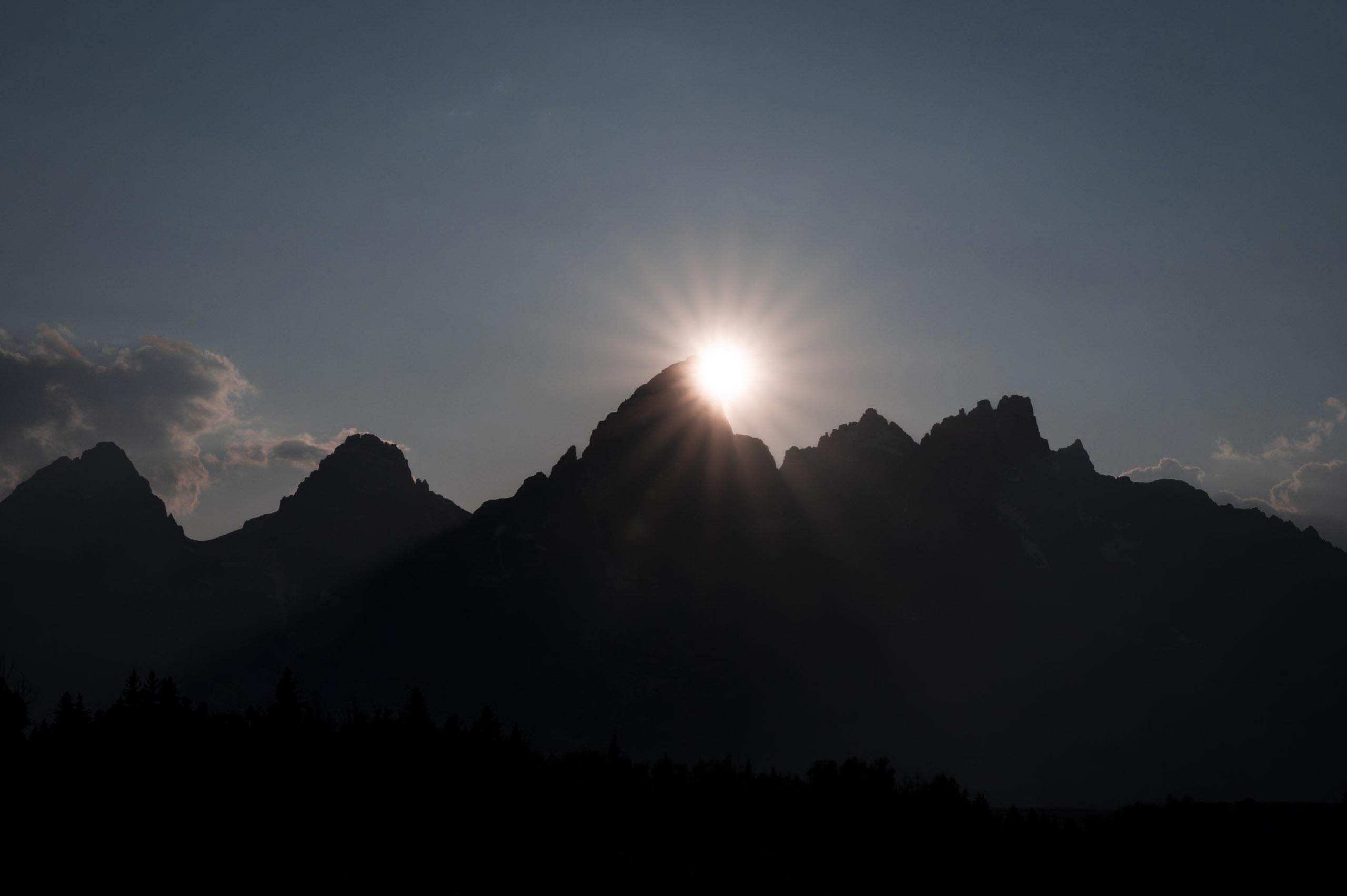
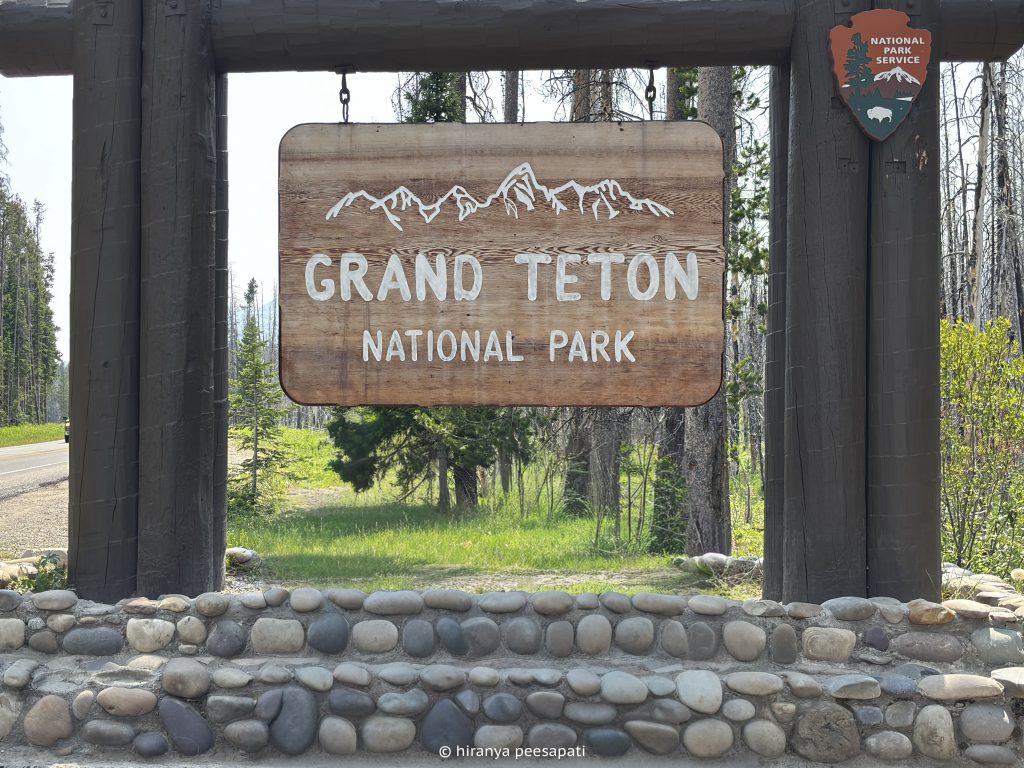
The first glimpse of the Tetons happens long before you’re officially “there.”
Driving down from Yellowstone, the mountains start as a jagged sketch on the horizon, sharpening with every mile. The entrance feels less like a gate and more like a quiet nod—an unspoken welcome into a valley carved by glaciers, where the Teton Range rises abruptly from the Jackson Hole valley floor, peaks like Grand Teton and Mount Owen already lining the skyline in the distance.
Jenny Lake, Mirror of the Peaks
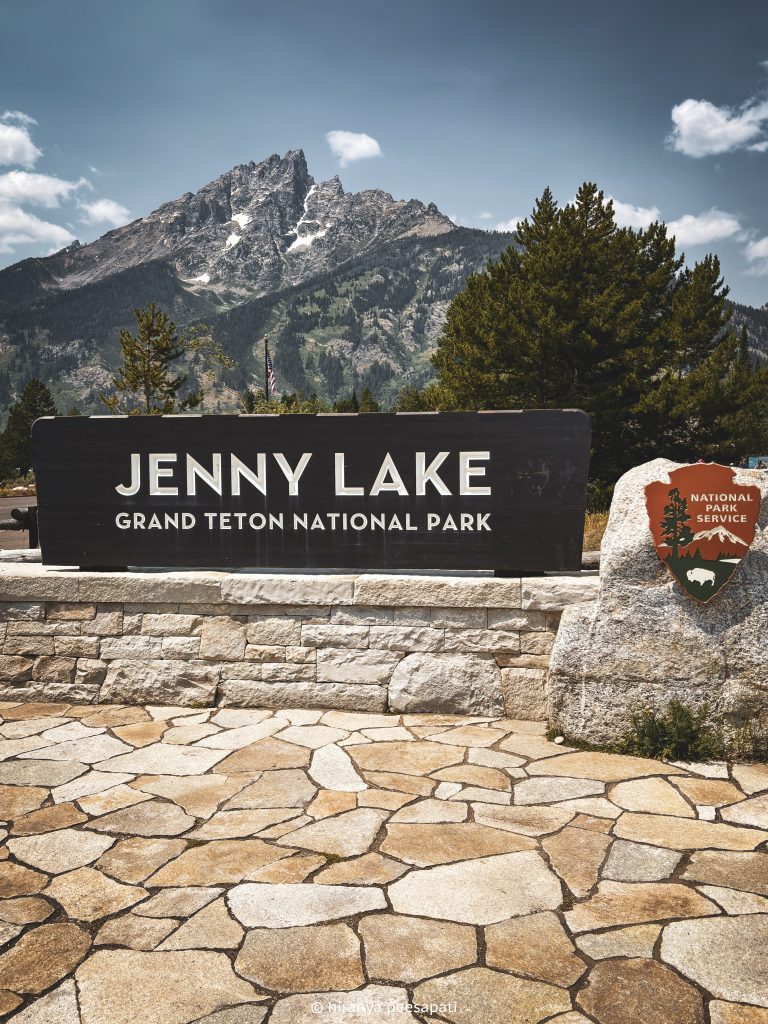
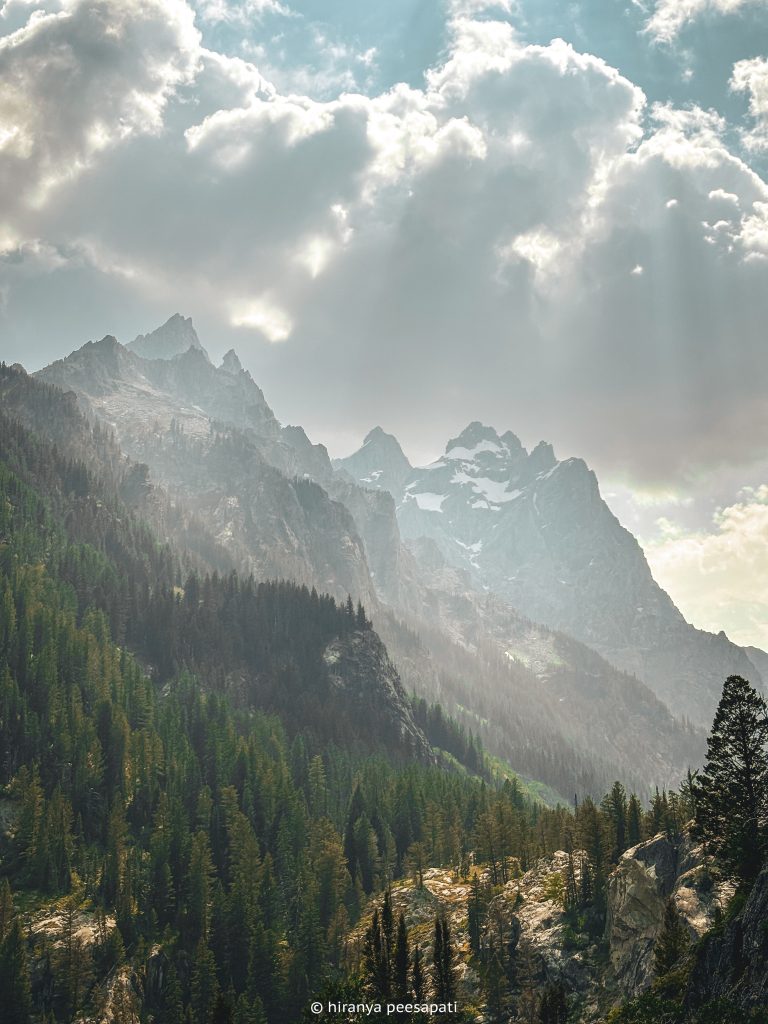
Jenny Lake sits at the foot of the range like a sheet of polished glass, catching every angle of rock and sky beneath the shadow of Teewinot Mountain and Grand Teton. The boat ride across feels both calm and charged at once, the wake drawing soft white lines behind you while Cascade Canyon and its walls of granite loom closer with every crossing. Hopping off at the trailhead, the path toward Inspiration Point wastes no time tilting upward—steep, rocky, the kind of climb that wakes up your lungs and legs in the best way.
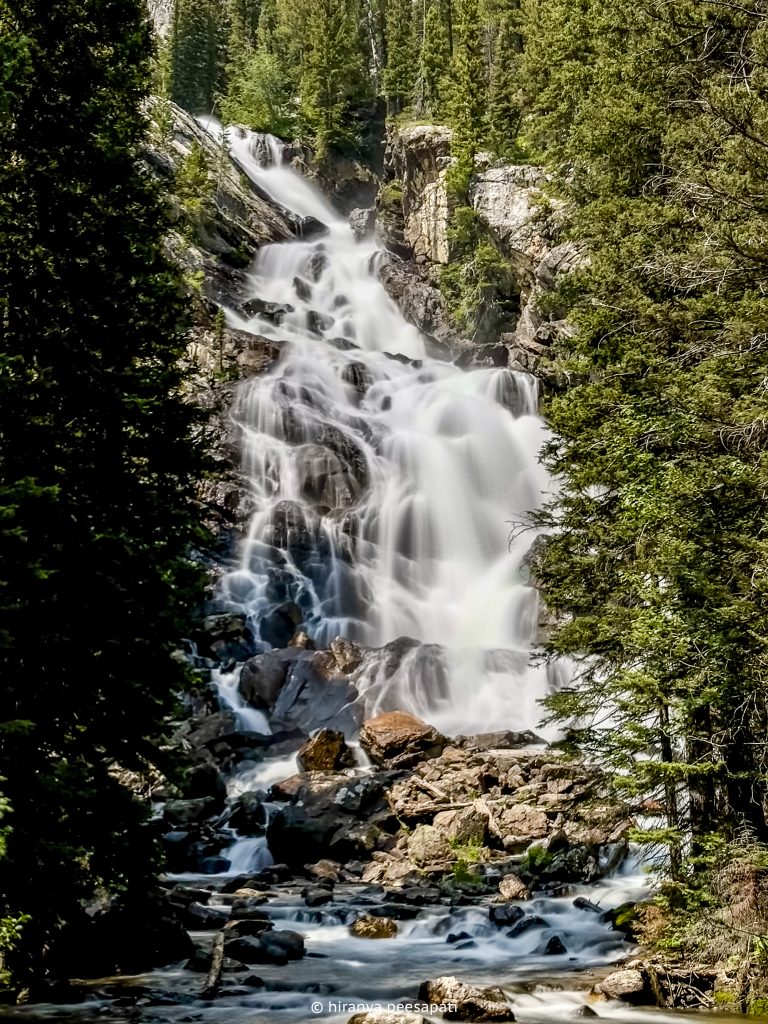
Hidden Falls crashes through the trees like a secret finally telling on itself, fed by snowmelt spilling down from the high country above. The last stretch to Inspiration Point clings to the hillside, your boots edging along stone as the view breaks open beside you. From the top, Jenny Lake lies below like a deep blue pocket and the Tetons slide into view from the side, layers of peaks—Grand Teton, Mount Owen, and Teewinot—stacking and overlapping in a jagged, unforgettable line.
Mornings with Mount Moran
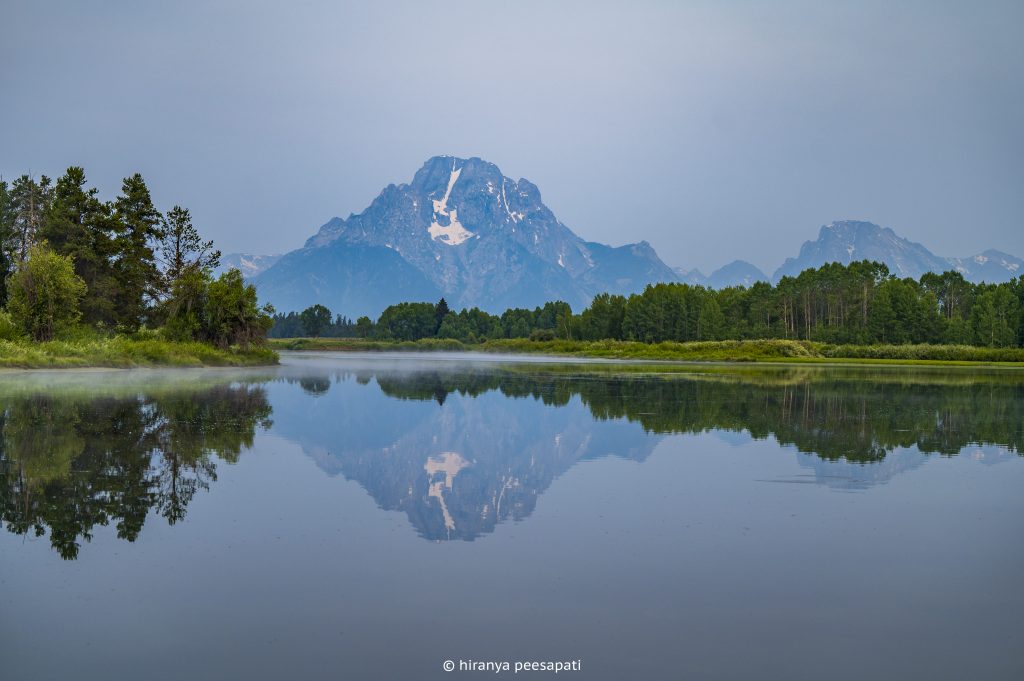
There’s a particular kind of quiet that belongs only to mountain mornings. Waking up to Mount Moran standing guard across the water, you catch its reflection lying perfectly still on the lake’s surface, a second peak made of light and shadow. Glacier-carved faces and the streak of Falling Ice Glacier high on its slopes appear crisp in the reflection when the air is still. Early fog bubbles up from the water in slow, ghostly ribbons, drifting across that reflection and softening the edges like a painting still drying.
Echoes of the Past at Mormon Row
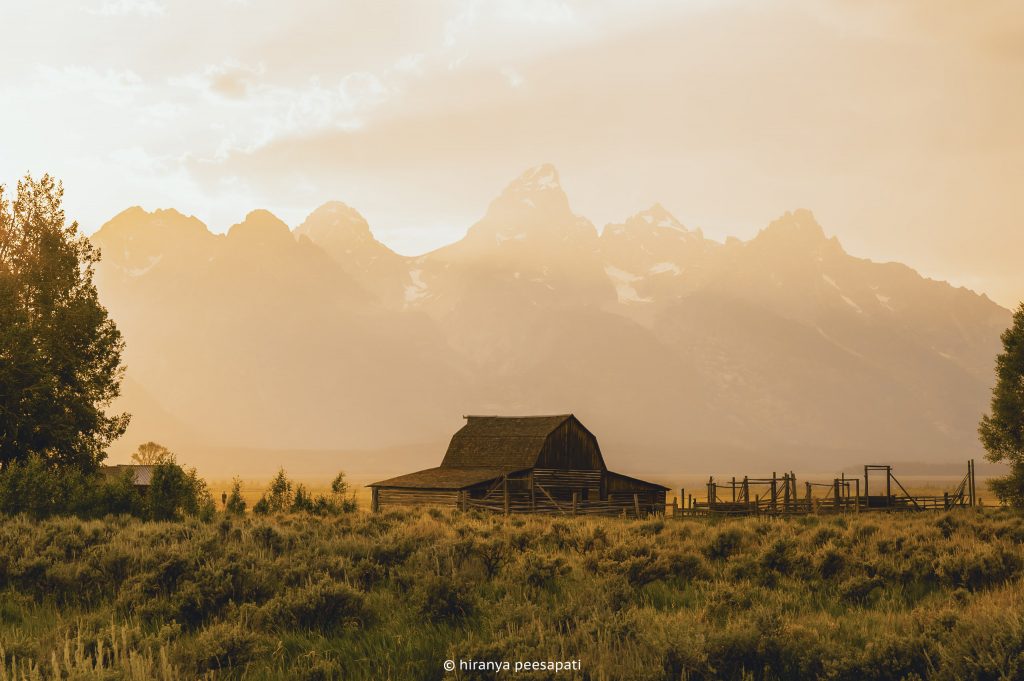
Mormon Row sits out on the flats of Antelope Flats like a story paused mid-sentence—weathered barns, wide meadows, and the Tetons lined up perfectly behind it all. The famous Moulton barns face the range as if they were built specifically for this backdrop: the sharp summit of Grand Teton, flanked by peaks like Middle Teton and South Teton, rising beyond old fence lines and open fields. As sunset leans in, the old wooden homesteads glow warm, boards catching the last light while shadows stretch long across the grass. It feels like stepping into an old photograph, one foot in the present and one in a time when these buildings were shelter, not icons.
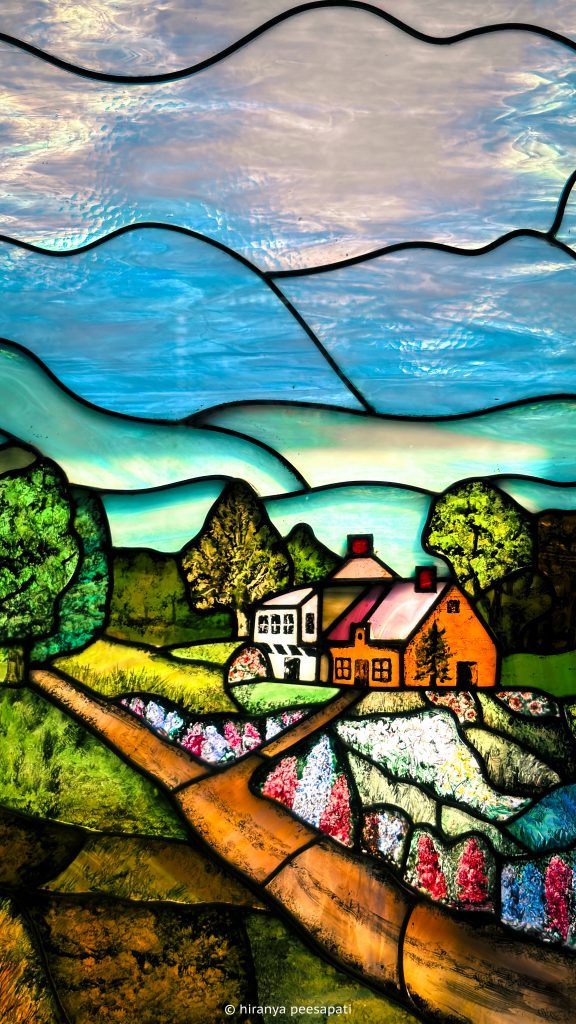
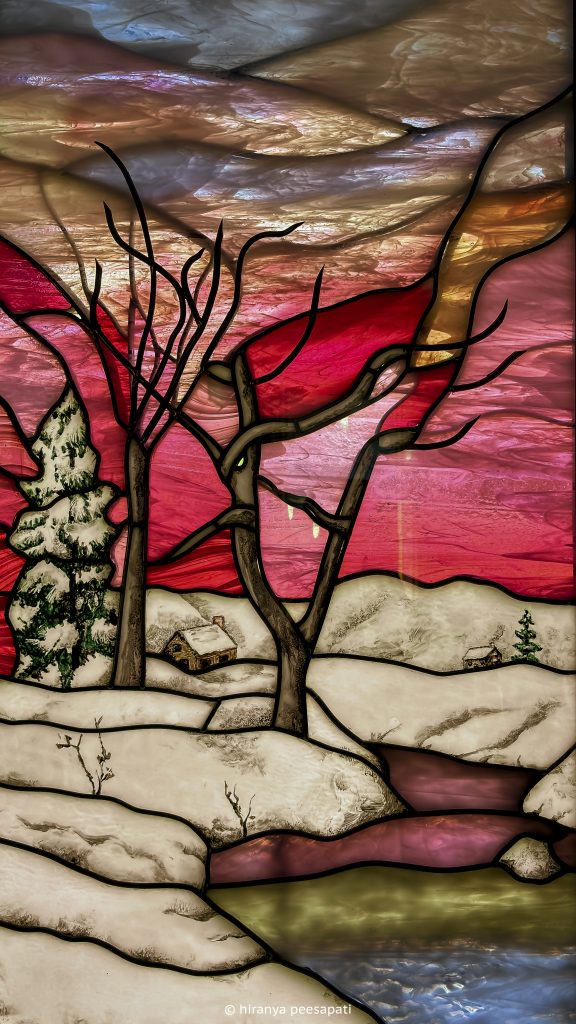
The small church connected to this early Mormon community completes that feeling, a simple structure with stained glass that catches every scrap of remaining sun. Colors spill softly across the interior, casting quiet shapes that make the space feel both humble and sacred at once, a reminder that people have been framing their lives around these mountains for generations.
Roads, Rivers, and a Familiar Frame
Driving around the park, the Tetons are your constant companion—sometimes ahead, sometimes off your side mirror, always demanding one more stop at the next turnout. The Snake River threads its way along the valley floor, bending and looping in that unmistakable S-curve you recognize from classic images, especially near the overlook made famous by Ansel Adams. From there, you see layers of dark spruce in the foreground, the silver ribbon of the Snake below, and the core of the Teton Range—Grand Teton, Mount Owen, and their neighbors—stacked like a stone wall beyond.
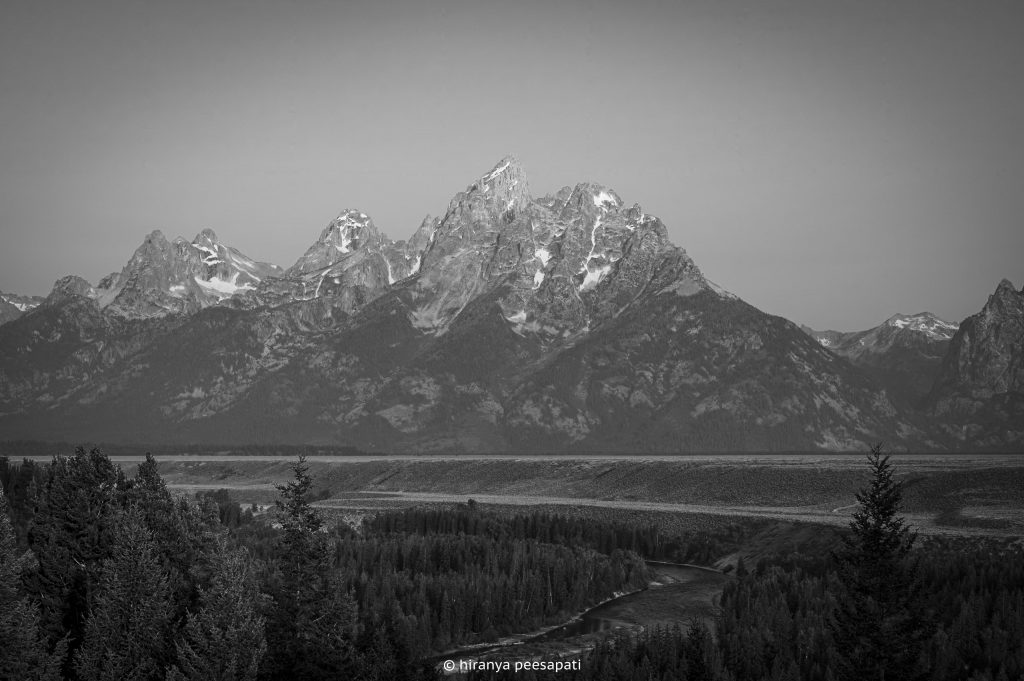
“No matter how sophisticated you may be, a large granite mountain cannot be denied — it speaks in silence to the very core of your being.”
Ansel Adams
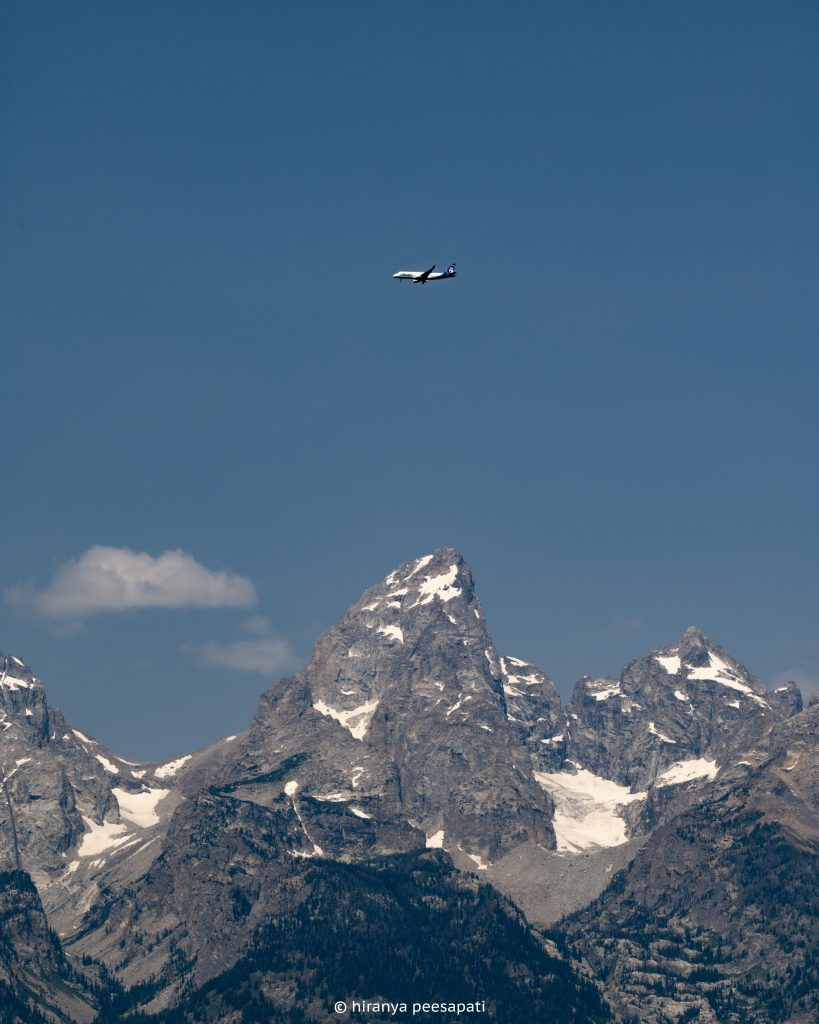
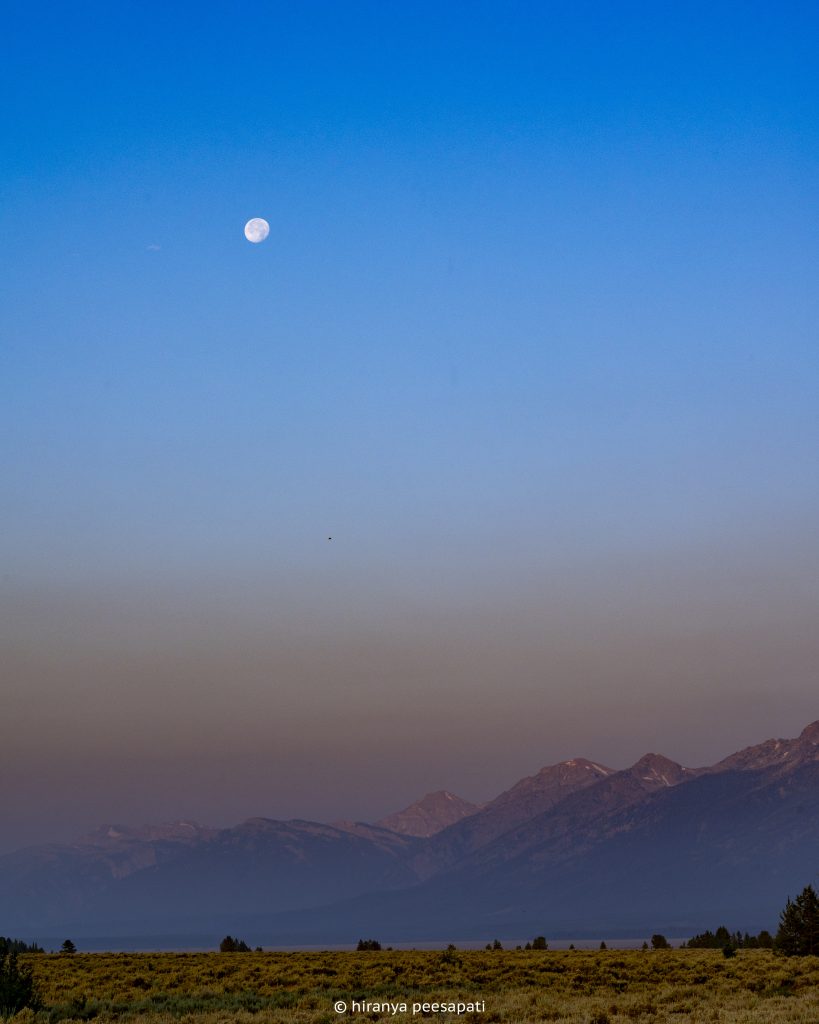
It’s a view that feels both familiar from prints and completely fresh in person, the light never quite the same twice and the river always shifting with the season. Along the roadside, pullouts reveal different faces of the mountains: the sharp point of Grand Teton, the blocky mass of Mount Moran, and the long ridges sweeping down toward the valley. By the time you roll out of the park, memory cards are full but the place still feels larger than what you’ve captured. Grand Teton isn’t just another stop between destinations—it’s a must-see national park that lingers long after you’ve left, mountains etched into your mind like the final frame of a favorite film.
Still pictures. Moving stories.

Leave a Reply