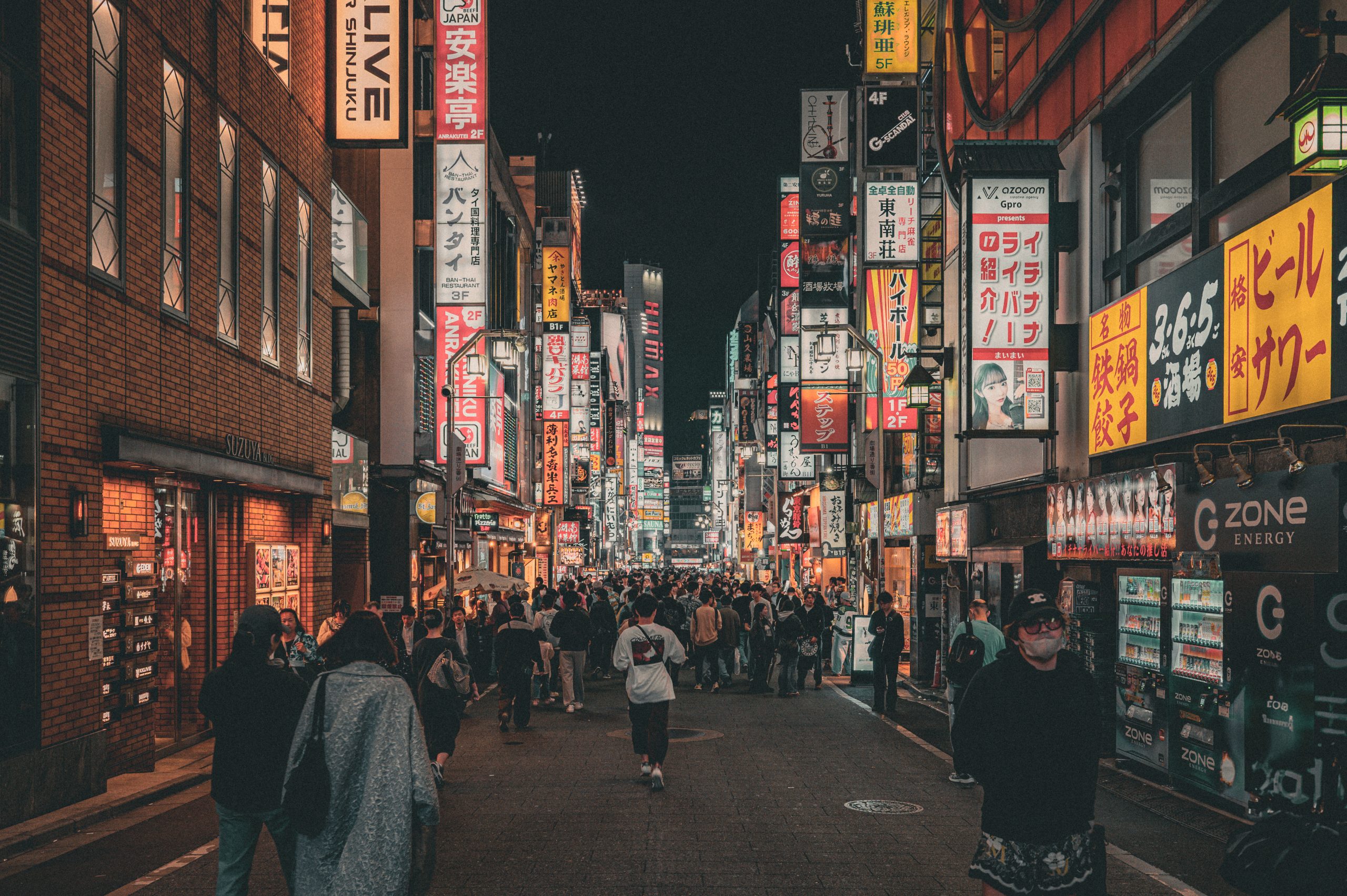
The transition happens quickly. One moment, you’re watching salarymen jostle past each other on crowded platforms. The next, the city exhales—and everything rewires itself.
Tokyo after sunset is not just a place that gets darker. It becomes a different city layered over the daytime one, drawn in neon lines, reflections on wet asphalt, and the low hum of late trains and last orders.
Shibuya: Where the Night Switches On
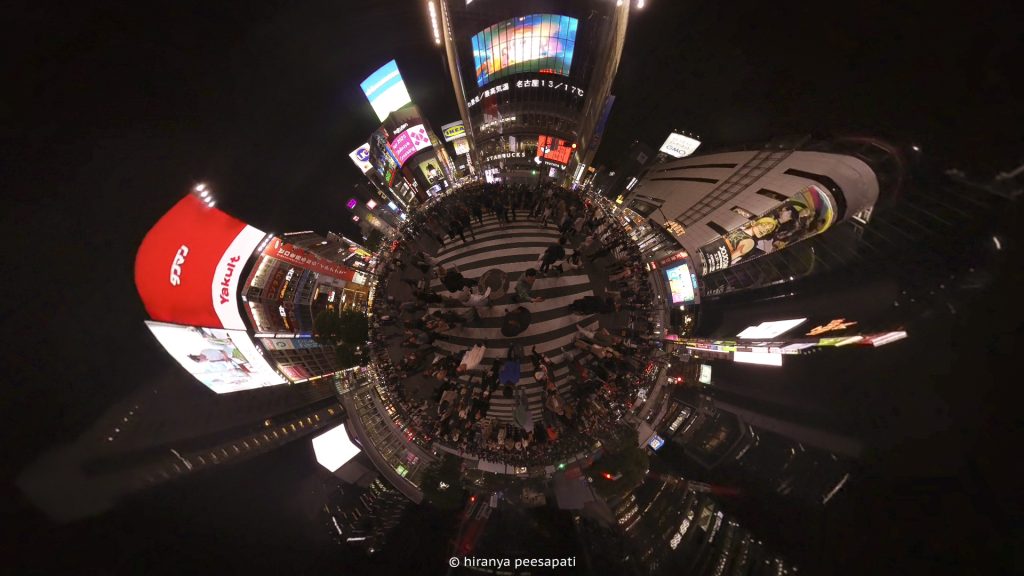
Shibuya Crossing is the obvious icon, but it feels different when you stop trying to conquer it with a wide shot and start treating it like a living organism. People move in waves, each light change like a heartbeat.
From the sidewalk, you watch umbrellas, tote bags, takeaway coffee cups, office shoes, platform boots—all colliding and parting without touching. For a moment, you are just one more pixel in a huge, moving screen.
Your camera naturally chases the glow: taxi lights streaking past, the cold blues and hot pinks of billboards, that cinematic shine on the road after a drizzle. When the pedestrian signal beeps and everyone flows forward again, it feels less like crossing the street and more like stepping into a current.
Shinjuku: Signs, Steam, and Side Streets
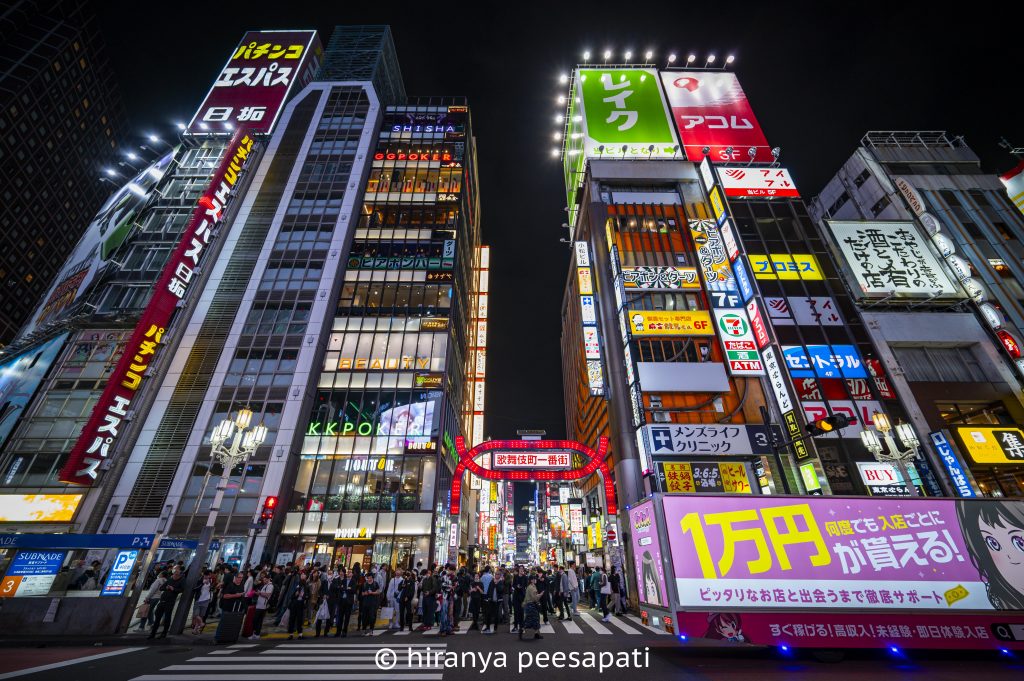
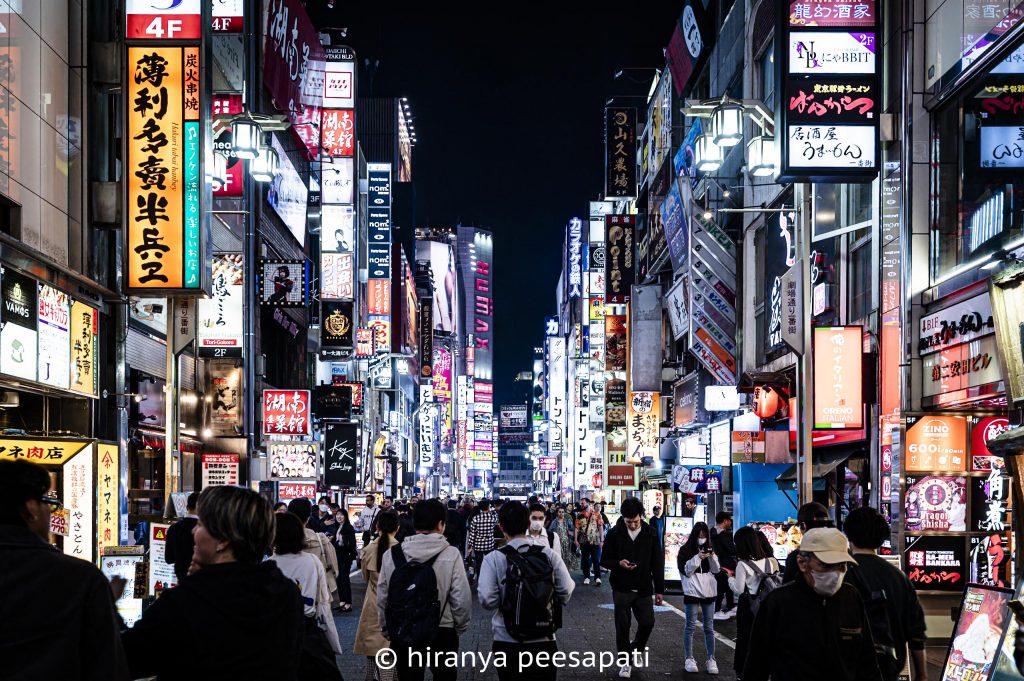
A short train ride later, Shinjuku swaps the wide-screen spectacle for stacked vertical chaos. Signs compete for your attention in three alphabets, layered from eye level to the sky.
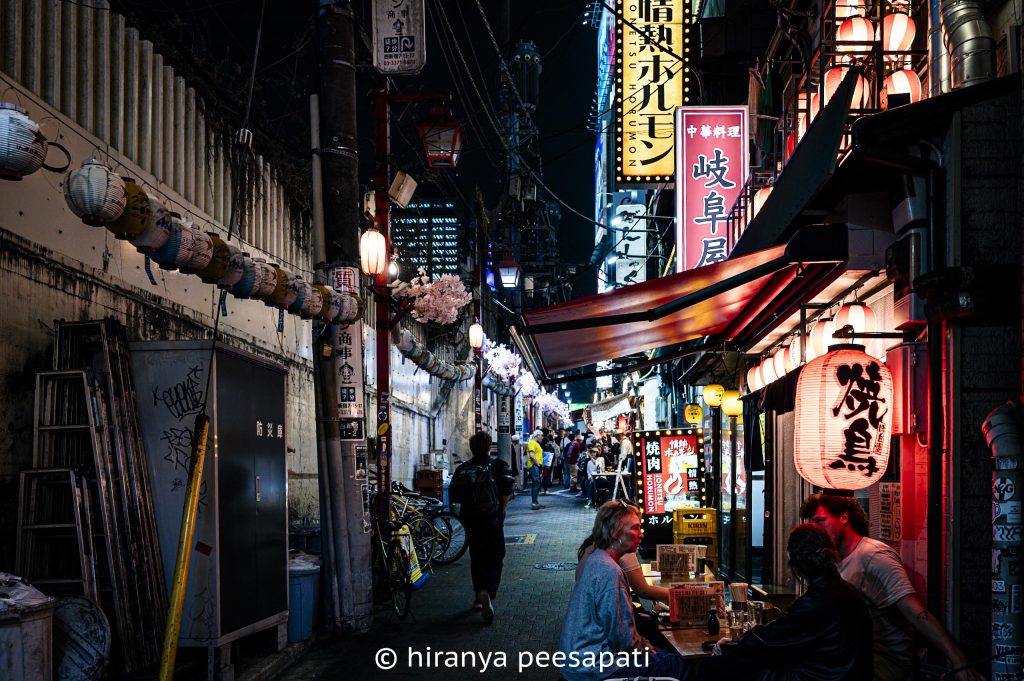
In the restaurant alleys, everything narrows and slows. You catch the hiss of grills, the clink of small glasses, the quiet negotiations of “just one more drink.” Lanterns hang low over doorways; curtains half-hide worlds of regulars, solo diners, and late-night conversations.
This is where the city feels most like a maze. Turn left and you find a smoky yakitori place with three seats and a view straight into the kitchen. Turn right and you are in a corridor of vending machines, cigarette smoke, and laughter spilling out of a tiny bar that looks full at five people.
The Vending Machine Moment
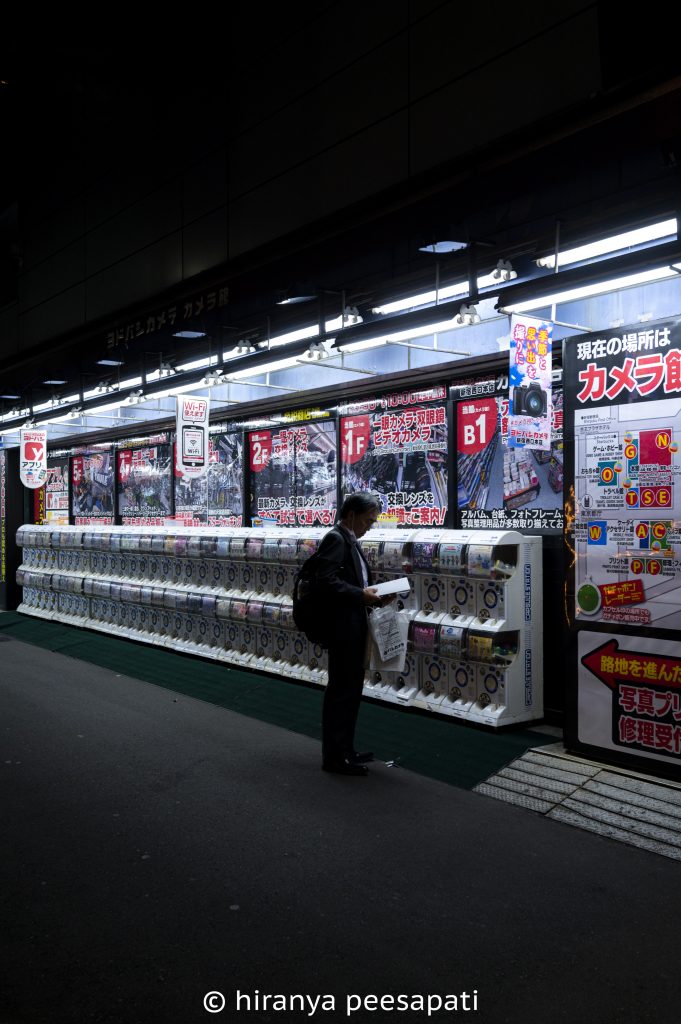
Some scenes feel like clichés until you stand inside them. A man pauses at a vending machine, flipping a small toy capsule in his hand, deciding whether to go again. It’s such a small, everyday moment, but under the neon it becomes strangely cinematic.
Tokyo Tower and the Quiet Above
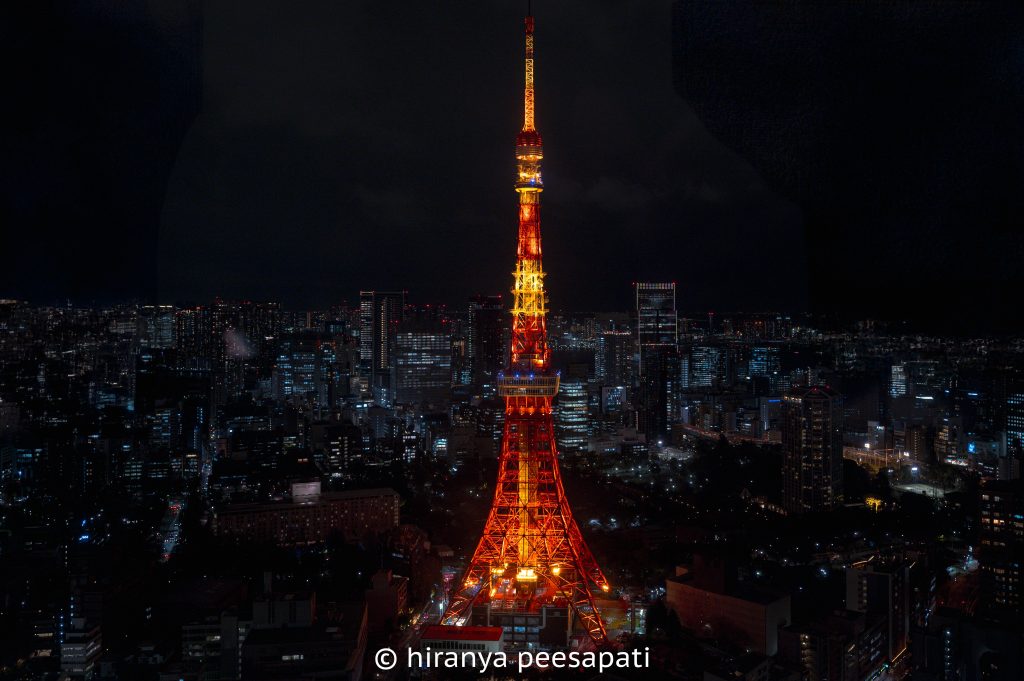
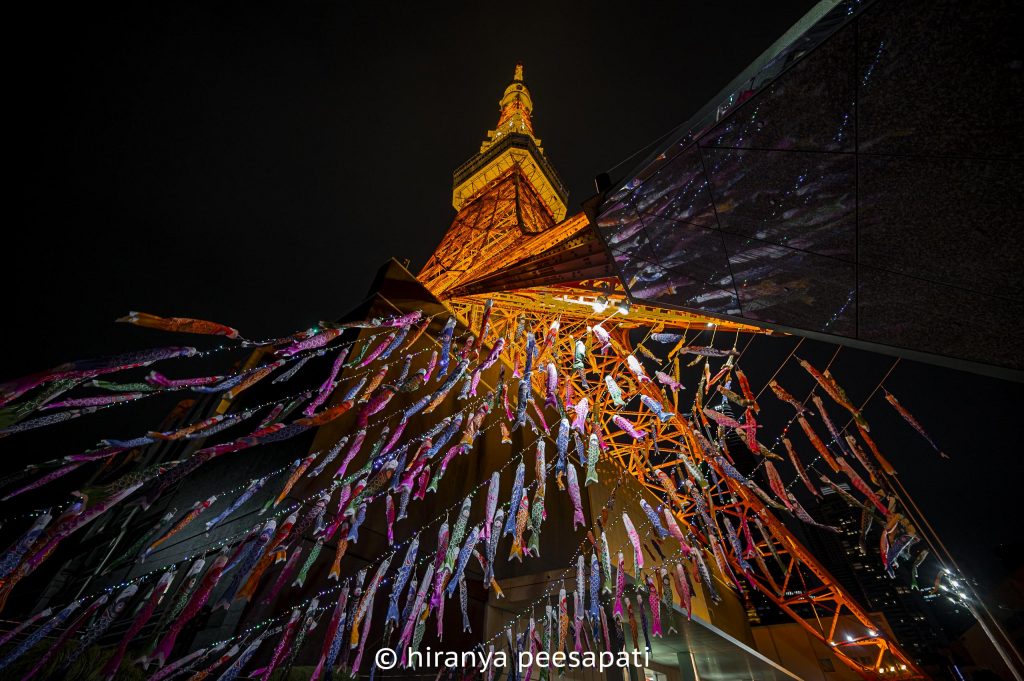
Later, the energy shifts again as you approach Tokyo Tower and the quieter, more upscale neighborhoods around it. From a distance, the tower is a clean silhouette—bright against a softer, deeper sky. Up close, it feels almost delicate, like someone drew a line of light straight through the city.
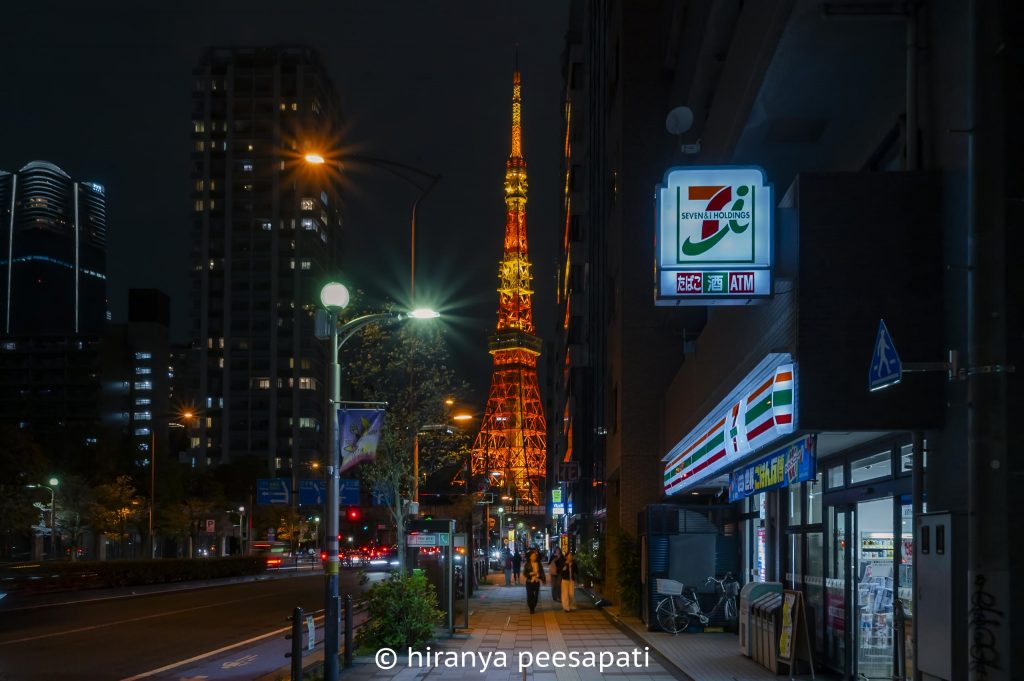
Koinobori carp streamers ripple in long rows beneath the tower, their bright fabric fish swimming against the night sky as if defying gravity. Families pause to photograph the display, the warm glow of lanterns mixing with the tower’s orange lattice. Just a few streets over, that iconic convenience store angle lines up perfectly—a 7-Eleven sign framing Tokyo Tower through the viewfinder, ordinary fluorescence suddenly elevated by the koi flags floating above. These are the moments that linger: tradition meeting Tokyo’s electric pulse.
Urban Echoes After Midnight
By the time you head back, the trains are quieter, but the city is still talking in small ways: a lone taxi idling at a red light, the buzz from a convenience store, the footstep echo in a station tunnel.
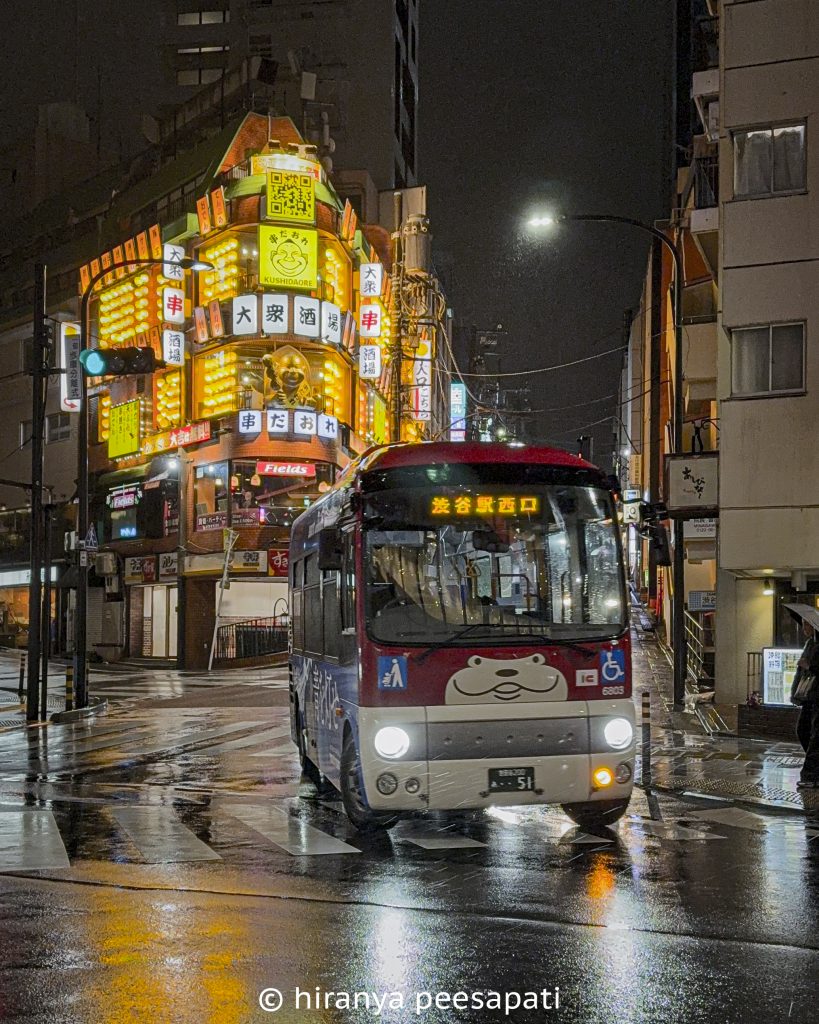
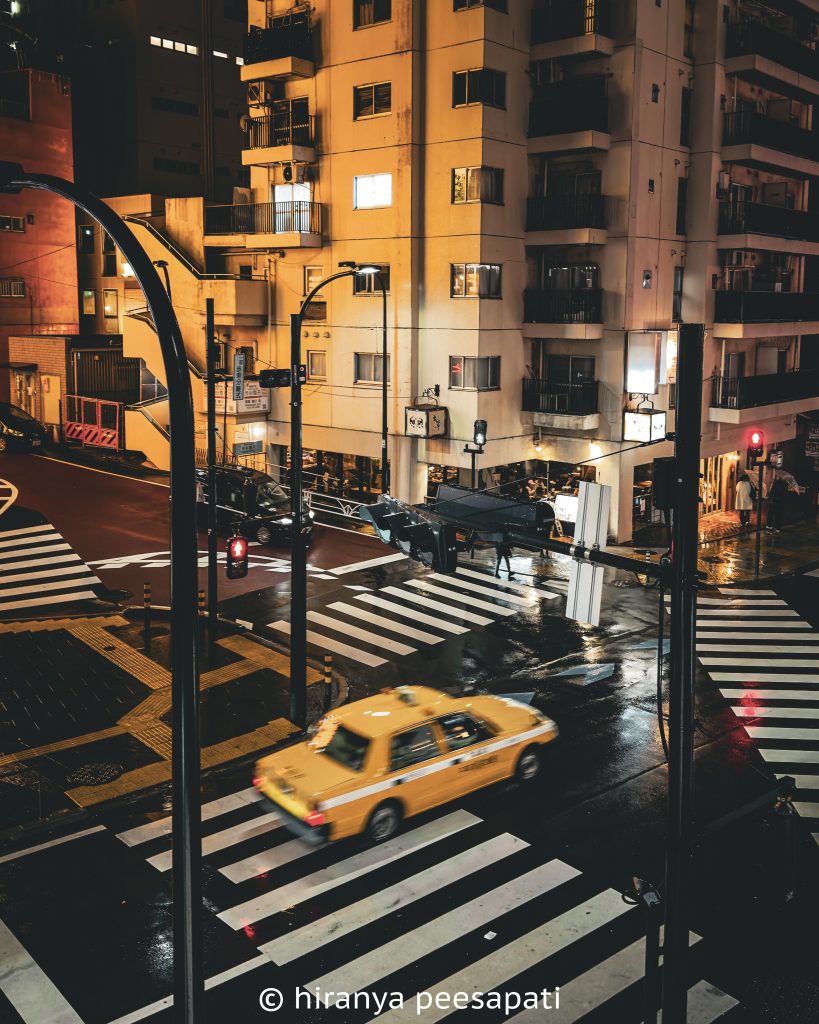
Tokyo in motion is not only about speed. It is about the afterglow of moments—the way streets remember footsteps, how neon lingers on your retinas, how a single night can stretch into a sequence of frames you keep replaying.
Still pictures. Moving stories.
Leave a Reply